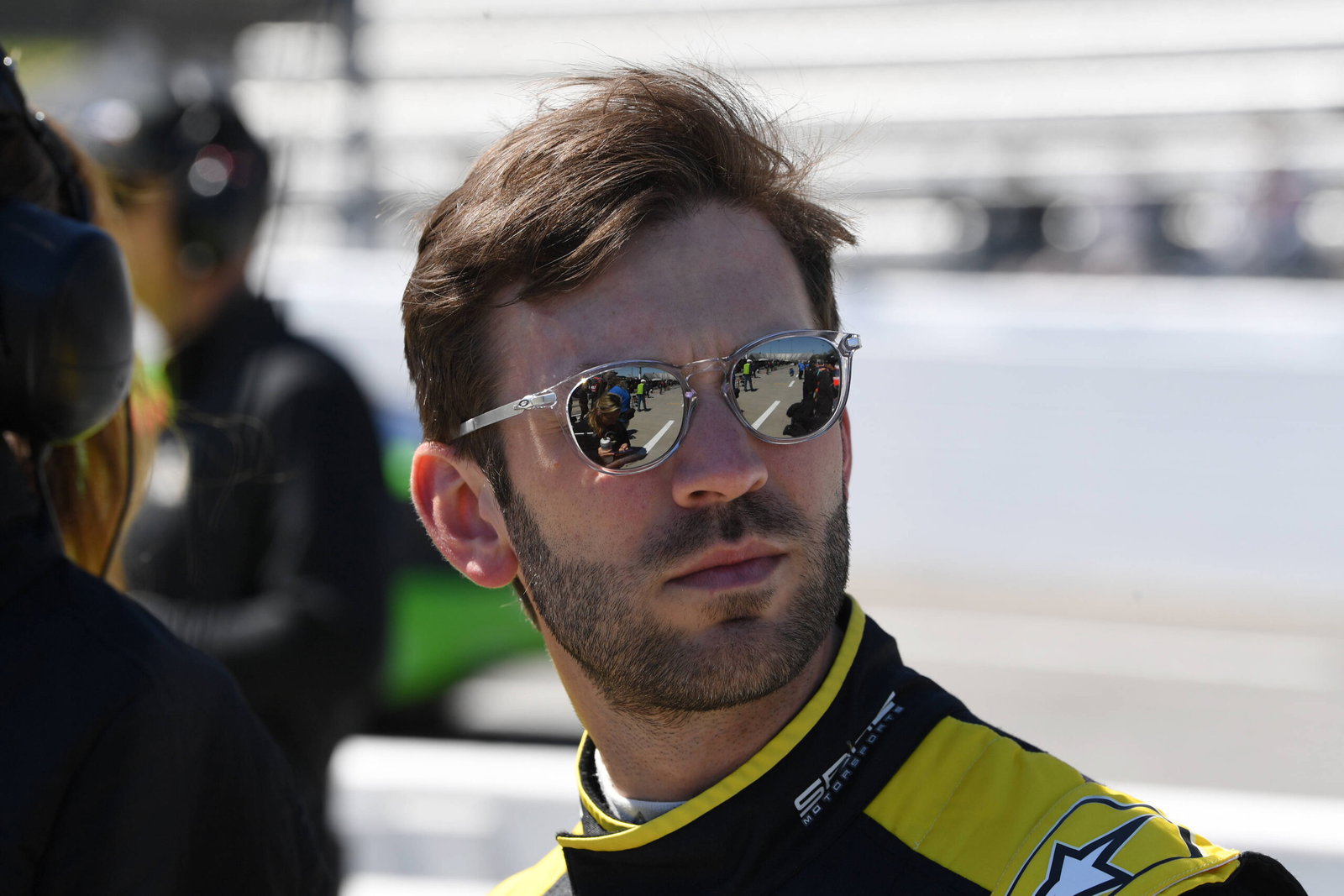
MARTINSVILLE, VA - MARCH 28: Daniel Suarez 7 Spire Motorsports Group 1001 Chevrolet watches qualifying during qualifying for the running of the NASCAR, Motorsport, USA Cup Series Cook Out 400 on March 28, 2026, at Martinsville Speedway in Martinsville, VA. Photo by Jeffrey Vest/Icon Sportswire AUTO: MAR 28 NASCAR Cup Series Cook Out 400 EDITORIAL USE ONLY Icon2603281048
MARTINSVILLE, VA - MARCH 28: Daniel Suarez 7 Spire Motorsports Group 1001 Chevrolet watches qualifying during qualifying for the running of the NASCAR, Motorsport, USA Cup Series Cook Out 400 on March 28, 2026, at Martinsville Speedway in Martinsville, VA. Photo by Jeffrey Vest/Icon Sportswire AUTO: MAR 28 NASCAR Cup Series Cook Out 400 EDITORIAL USE ONLY Icon2603281048
Jun 25, 2026, 6:30 PM CUT
Daniel Suarez demands free hand from NASCAR for self policing after barrage of driver penalties
NASCAR has often showcased emotion as a part of its appeal. This has been apparent in its broadcasts, advertisements, and podcasts, yet engagement in altercations is often fined by the organization. Some, like Daniel Suarez, argue that this takes the taste of racing away as it inhibits drivers’ true personalities.
Several examples now stand of how NASCAR has handed out a slew of strict penalties over the years. Take, for example, the Bubba Wallace incident in 2022, when he was suspended for one race after he intentionally wrecked Kyle Larson at Las Vegas and later shoved him while exiting his car. Or even Austin Cindric, who was fined $50,000 and docked 50 points in March 2025 after NASCAR found that he had intentionally spun Ty Dillon at COTA.
On the last episode of Rubbin is Racing, when co-host Spider asked about whether he would change anything in NASCAR, Daniel Suarez agreed to his aforementioned sentiment and added, “This change it will be more of giving drivers freedom to show their personalities.”
He explained the aspect he wants changed, saying, “If you hit me on the racetrack and the race is over, and after the race I go and I say, Spider, what the h*** you did that for? And then we have to have a little bit of a confrontation? To let it be,” addressing NASCAR.
What is interesting is that Suarez himself has been a recipient of a $50,000 fine in the Cup race at Circuit of The Americas in 2023. The organization decided to penalize him under Sections 4.4.B&D, which pertain to NASCAR Member Conduct, for “contact with another vehicle on pit road after the race.”
The reason this happened was that Suarez went after Ross Chastain and Alex Bowman on pit road after contact during the race turned a potential top-five result into a 27th-place finish for the driver.
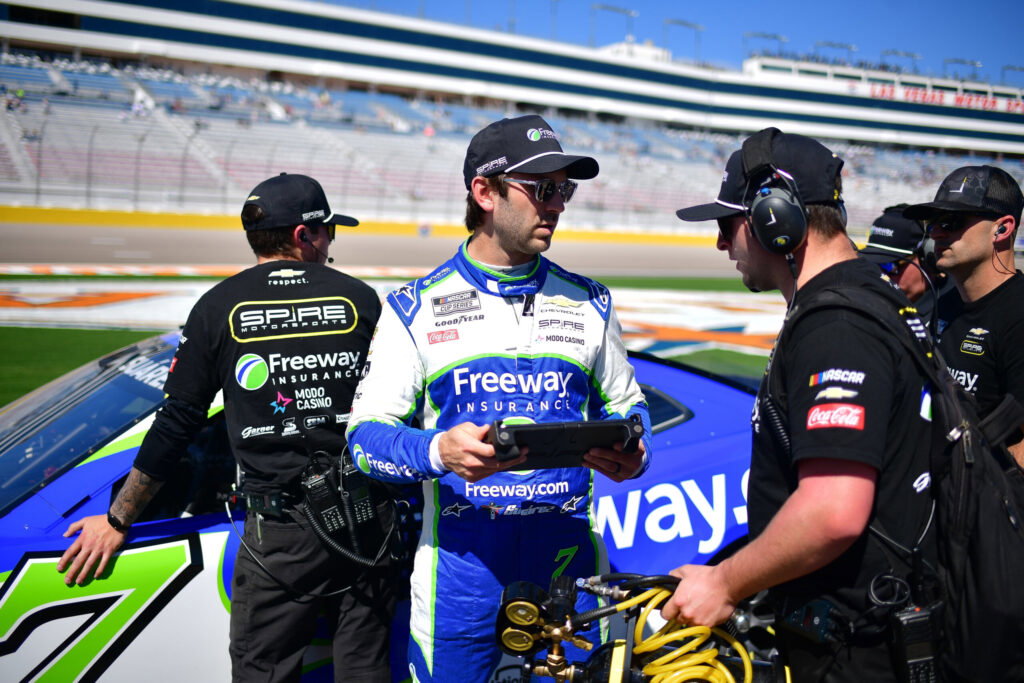
Mar 14, 2026; Las Vegas, Nevada, USA; Spire Motorsports driver Daniel Suarez (7) during qualifying at Las Vegas Motor Speedway. Mandatory Credit: Gary A. Vasquez-Imagn Images
Mar 14, 2026; Las Vegas, Nevada, USA; Spire Motorsports driver Daniel Suarez (7) during qualifying at Las Vegas Motor Speedway. Mandatory Credit: Gary A. Vasquez-Imagn Images
In fact, this restriction from NASCAR could be the reason why Suarez confronted Chastain calmly this year at Vegas with his hands tied behind his back, something he also used figuratively to describe the situation.
“NASCAR has us a little bit with our hands tied behind the back,” Suarez added on Rubbin is Racing, before saying that the matters should only be fined when crew members get involved.
These rules are strict nowadays and are quite in contrast when we consider how, in the early years, NASCAR penalized such incidents. Let’s take a look at the older rulebook and how it was implemented.
When drivers handled their own justice
The old structure in NASCAR did not simply tolerate aggression but rather allowed drivers to self-police, taking into account their reputation and garage code. This has often been called the driver's code in the sport. Autoweek reported it once, explaining how it comes with limits.
What this allowed for then was that drivers could themselves restrict incidents of violence based on this code. This prevented such incidents from becoming major penalty stories but secured them as NASCAR folklore.
For example, take the case of Dale Earnhardt spinning Terry Labonte at Bristol in 1999. Despite that, Earnhardt kept the win after saying he only meant to rattle Labonte’s cage.
Today, a clear contrast to this rule can be observed. Take, for example, the case of Ryan Preece at Texas in 2026, where NASCAR fined Preece $50,000 and docked him 25 points after they ruled that his contact with Ty Gibbs violated Member Conduct guidelines for spinning another vehicle.
This clearly showcases how the definitions of NASCAR have changed through the years, thoroughly restricting driver violence and intentional incidents while, as some would argue, also making the sport less of its original watch.
Read more at the RFK Racing Digest!
Written by

Uday Jakhar
Edited by

Suyashdeep Sason