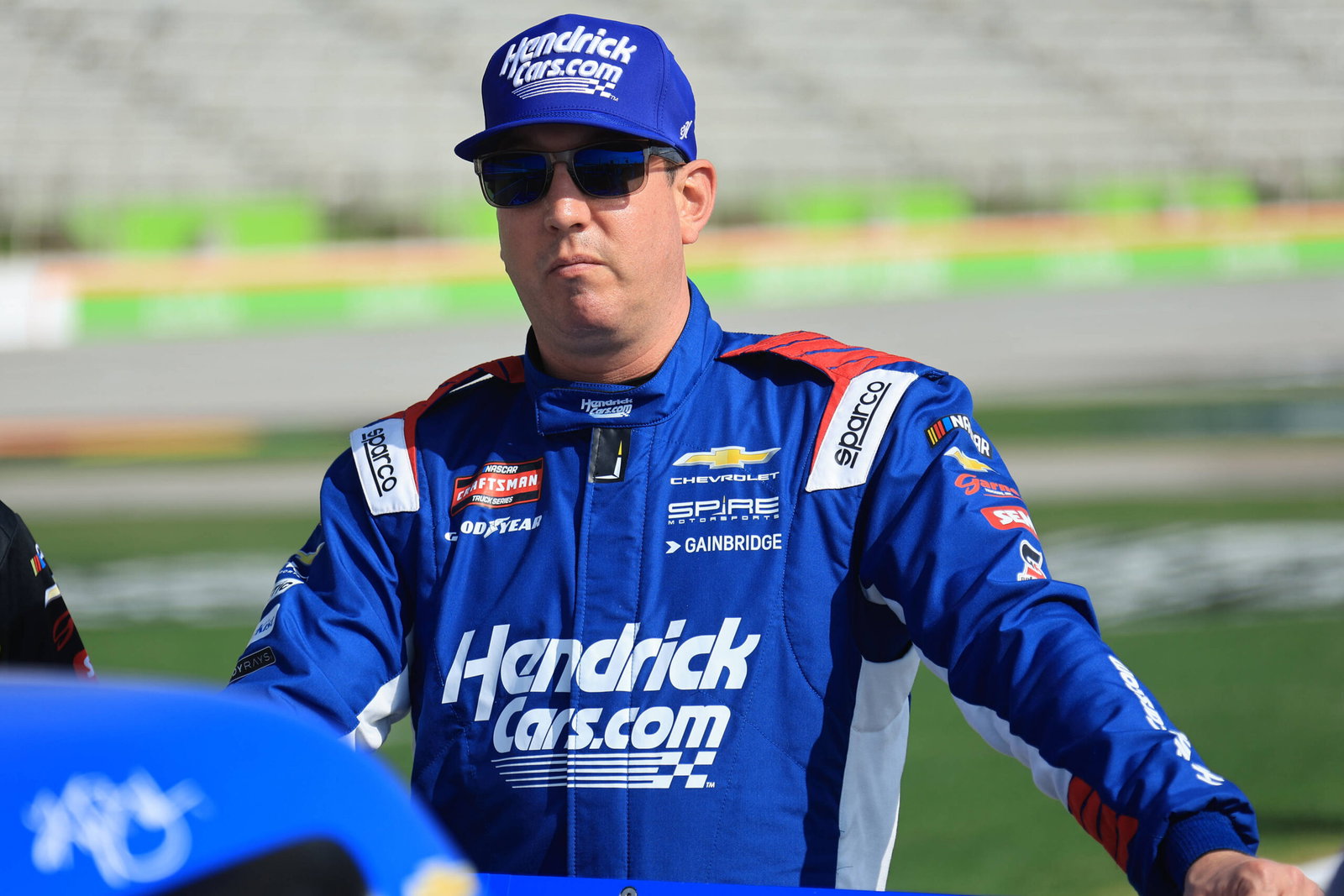
ATLANTA, GA - FEBRUARY 20: Kyle Busch 7 Spire Motorsports HendrickCars.com Chevrolet talks with a member of his crew during qualifying for the NASCAR, Motorsport, USA CRAFTSMAN Truck Series FR8 Racing 208 on February 20, 2026 at EchoPark Speedway in Hampton, GA. Photo by Jeff Robinson/Icon Sportswire AUTO: FEB 20 NASCAR CRAFTSMAN Truck Series FR8 Racing 208 EDITORIAL USE ONLY Icon2602206178208
ATLANTA, GA - FEBRUARY 20: Kyle Busch 7 Spire Motorsports HendrickCars.com Chevrolet talks with a member of his crew during qualifying for the NASCAR, Motorsport, USA CRAFTSMAN Truck Series FR8 Racing 208 on February 20, 2026 at EchoPark Speedway in Hampton, GA. Photo by Jeff Robinson/Icon Sportswire AUTO: FEB 20 NASCAR CRAFTSMAN Truck Series FR8 Racing 208 EDITORIAL USE ONLY Icon2602206178208
Apr 24, 2026, 3:51 AM CUT
Kyle Busch Says Changing Talladega Stage Lengths 'Will Not Make a Difference'
As NASCAR attempts to solve the pressing issue of fuel-saving races with tweaks for Talladega, Kyle Busch isn't expecting the changes to yield results.
NASCAR has received commendations from several experts for its attempt to curb fuel-saving during the races. Acting on the feedback, the Jack Link's 500 at Talladega Superspeedway on Sunday will have revised stage lengths.
However, Kyle Busch is not too optimistic about the potential effect of this change. "I don’t think changing the stage lengths will make a difference," he said (via ovalinsider). "The purpose is to make the crew chiefs not have an idea of how to strategize fuel saving. But trust me, they’ll figure out a way to strategize for it."
The race used to be completed in three phases: two stages of 60 laps, and the final stage of 68 laps. For this weekend, NASCAR is implementing a long initial stretch of 98 laps followed by two equal stages of 45 laps each.
This comes after the season-opener, the Daytona 500, saw racers apply anti-throttle measures to save fuel during the stages. NASCAR EVP John Probst believes the lengthened opening stage will make for some "pretty interesting strategies" and eliminate a three-wide, fuel-saving race.
NASCAR's fuel-saving issue and Kyle Busch's overtaking concerns
Todd Gilliland has highlighted that track position in the final stage will be the true determinant of how the Talladega race will pan out. On NASCAR reporter Jeff Gluck's podcast, Gilliland pointed out that the teams can move the fuel-saving strategy to the elongated initial part of the race, which will affect track position going into the latter two stages.
These anti-throttle fuel-saving measures, while legal, pose a threat to the spirit of racing. It makes it difficult for drivers to get into real battles and almost eliminates the prospect of passing others on the track.
Kyle Busch also explained how overtaking has been reduced to those done in the pits and through strategies. "The only true way to pass is when guys are sitting still on pit road, short filling and having the opportunity to jump them there," he said.
"Because when you get back on track, and everybody’s running three-wide part throttle, there’s nowhere to go. And then when we go two-wide, it’s always two-wide around the bottom. It’s hard to get a lane where there’s enough momentum going," the 40-year-old Richard Childress Racing driver added.
In theory, the elongated first stage should mix up strategies across the grid, and the shortened latter stages should enable full-throttle racing. This is a positive step by NASCAR, and its impact on this weekend's Cup race will determine the organization's course of action for the rest of 2026.
Read more at the RFK Racing Digest!
Written by

Abhisek Bajaj
Edited by

Yask Kotak