<p>Source: X/@Basso488</p>
<p>Source: X/@Basso488</p>
May 26, 2026, 3:07 AM CUT
Remembering Smokey Yunick: WW-II Pilot and Revolutionary NASCAR Engineer
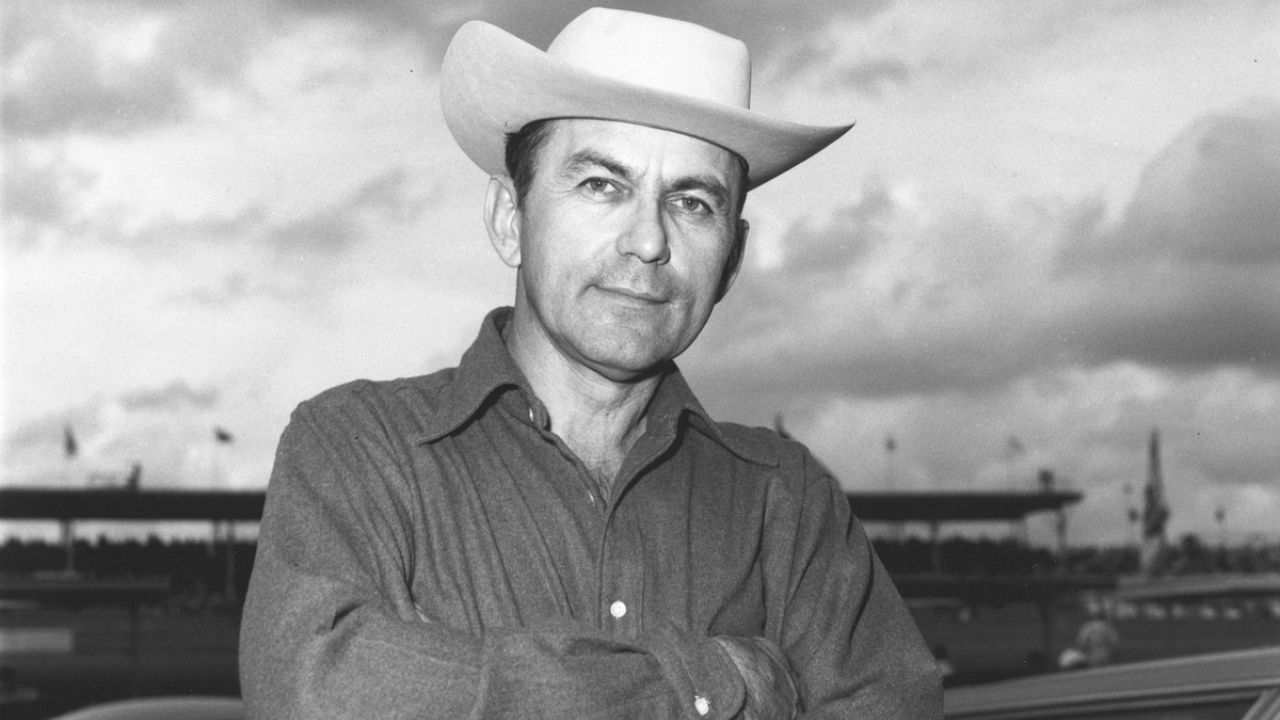
Imagine being so sharp that every loophole you find is one you can exploit — and once it's closed, you simply move on to the next one. That, in brief, is the life of Smokey Yunick.
Born Henry Yunick in 1923, Smokey came from humble beginnings in Pennsylvania. Growing up, he was fascinated by bikes and wanted to race motorcycles.
He once bought a motorcycle and tuned it, but when he reached the track, he realized how little he knew about tuning.
His daughter Trish recalled how the name Smokey stuck. “He realized he didn’t know anything about tuning as he thought he did, and things smoked like crazy. So for the entire race, the track announcer called him Smokey. When he went to work the next day, his friends had been in attendance at the track, and they called him Smokey, and it stuck for the rest of his life.”
Smokey dropped out of school because his parents couldn’t afford it, and even lied to get into the service when World War II began. According to the New York Times, he joined the U.S. Army Air Corps and served as a B-17 bomber pilot in the European theater with over 50 successful missions.
Smokey returned home after the war with a deep understanding of fighter jet physics, transforming that knowledge into both his passion and his lifelong pursuit. In 1946, he moved to Daytona and a year later opened up a garage, which would serve as the base of everything he did. The garage was called “Smokey’s Best D*** Garage In Town.”
Soon, NASCAR began to take shape, and stock car racing piqued his interest. Smokey said, “The rules made stock car racing intriguing to me. I didn't race like anybody else. My race begins with Mother Nature, gravity, and centrifugal force, trying to go the furthest distance on a given amount of fuel, and trying to get the most power out of a certain size engine.”
Cheater or Innovator?
Smokey had a long list of controversies, or rather confrontations, with Bill France Sr., the founder of NASCAR. He followed the rules so closely that he eventually developed his own interpretations of them, shaping and refining them into the form we recognize today.
“Back in them days, you gotta remember, none of us knew anything about nothing, about how to race a stock car," Smokey said. "And so France started NASCAR; he didn’t know what the h*** he was doing either. So he wrote the rule book, which was about one page, and it started off with, "You can’t do nothing."
To Smokey, things were clear; if it was written that you cannot do it, then he wouldn’t do it, but as long as it was open-ended, his innovation would come to the forefront. Like the inflated basketball in his larger-than-average fuel tank.
Smokey created an extra-large tank, and to get through inspection with the standard fuel weight, he would add an inflated basketball, which would mean less fuel in the tanks for checking, but the capacity to carry more during races. The fuel tank sizes were standardized.
He once created a fuel line so long that when his fuel tank was confiscated on inspection, the car still had enough fuel to reach the garage. Another innovation was freezing his fuel so more could be put into the tank, which would heat up through the race, leading to fewer stops for fuel.
Smokey’s engines and his position as crew chief saw Herb Thomas win two Cup championships in the Fabulous Hudson Hornet in 1951 and 1953. He also engineered the car that won the Indy 500 in 1960.
His run-ins with France kept him out of the NASCAR Hall of Fame, but Smokey was inducted into the International Motorsports Hall of Fame. His greatest innovation could be the first Indy car with a wing for downforce. It stood as the inspiration for Formula 1 and NASCAR, as well as other motorsports.
Read more at the RFK Racing Digest!
Written by

Debrup Chaudhuri
Edited by

Ankita Yadav